For too long, fatherhood in South Africa has been viewed through the narrow lens of financial provision. The idea that a father’s primary responsibility is to provide materially for his children is deeply entrenched in our culture. However, while financial support is critical, it is not enough. Children need more than money to thrive; they also need a nurturing and positive fatherly presence in their lives, providing emotional support and care.
Unfortunately, while the importance of such a fatherly involvement is well documented, according to the General Household Survey 2023, almost 65% of children in South Africa do not live in the same home as their biological father. While 76% of children do share a household with an adult man who is not their biological father, 24% live in homes with no adult male presence at all. While extensive research confirms that most fathers do care for their children and wish to be involved in their nurturing, many are thwarted in their efforts by a range of challenges, including unemployment-driven economic migration and various other socio-economic pressures.
The consequence of these challenges, coupled with a societal norm of defining fatherhood solely in economic terms, risks alienating these men from their children’s upbringing and perpetuating a system where fathers feel inadequate if they cannot provide financially. It’s an outdated model that does a severe disservice to both fathers, children and mothers- and it must change.
This is particularly important in the context of early childhood development (ECD), where research shows that involved fathers contribute significantly to cognitive, emotional and social growth. The State of South Africa’s Fathers 2024 (SOSAF) report highlights that children with engaged fathers exhibit better language skills, perform well academically and are more likely to develop strong emotional resilience. Importantly, the benefits of father involvement go beyond the child – it also serves to strengthen families and communities, in the process supporting a more socially cohesive society.
Moving beyond gendered parenting roles
Crucially, redefining fatherhood does not diminish the role of mothers. Rather, it acknowledges that both parents, as well as other supportive adults, have a vital part to play in raising children. For too long, parenting has been divided into rigid gender roles. This has compartmentalised fathers as providers and mothers as nurturers. It’s a binary view that doesn’t reflect the realities of modern family life, nor does it serve the best interests of children. Shared parenting responsibilities, where both mothers and fathers contribute equally to a child’s emotional, educational and psychological wellbeing, are far more beneficial.
Research shows that children who experience this type of balanced caregiving are more likely to develop healthier relationships, perform better academically and grow into well-adjusted adults who themselves become better parents. Shifting society towards this model of shared parenting requires more than just individual action; it demands structural support. Policies that encourage father involvement, such as equitable parental leave, community-based fatherhood programmes and workplace flexibility for caregiving fathers, need to be prioritised. Public messaging must also change, moving away from outdated portrayals of fathers as distant providers and instead celebrating the diverse ways in which men can contribute to children’s lives.
The important role of social fathers
Given South Africa’s unique socio-economic landscape, it is essential to broaden the concept of fatherhood. In the ECD context, the Nurturing Care Framework emphasises the crucial role of fatherly involvement as imperative for a child’s health, emotional security and cognitive growth. Engaged fathers help create a nurturing environment that is essential for the child’s overall development and wellbeing. Where biological fathers are unable to be present, other men in the community, including grandfathers, uncles, teachers, coaches and mentors, need to be encouraged to take on more engaged roles in children’s lives, offering stability, guidance and emotional support and engaging in play and other activities.
Integrating fathers into the ECD ecosystem
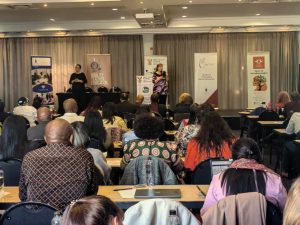
Beyond individual efforts at greater engagement by fathers themselves, South Africa needs to make more of an effort to integrate fathers more deliberately into the ECD system. Many ECD centres and parenting programmes are structured with mothers in mind, often unintentionally excluding fathers from active participation. The Sesame Workshop South Africa’s initiative is helping to address this gap by creating resources and interventions that encourage men to take on nurturing roles in ECD settings. Through initiatives such as the Imbizos of Play workshops and the #BondThroughPlay campaign, Sesame Workshop South Africa is actively promoting the idea that play and emotional engagement are just as vital as material provision. These programmes are normalising the idea of fathers being actively involved in their children’s early development, demonstrating that fatherhood is not just about presence, but also about participation.
We all need to help change the narrative
Redefining fatherhood in South Africa is not just an aspirational goal – it is a necessary shift that will have long-term benefits for children, families and communities. It’s time for South Africa society to embrace a more inclusive definition of fatherhood – one that values emotional presence as much as financial provision – and thereby create stronger families to ensure a better world for all generations.
About Sesame Workshop
Sesame Workshop International South Africa is the global impact nonprofit whose mission is to help children everywhere to be stronger, smarter and kinder. For over 25 years, we have worked at the intersection of education, media, and research, creating joyful experiences that enrich minds and expand hearts, all in service of empowering each generation to build a better world.
Our beloved characters, iconic shows, direct services and outreach in communities bring playful early learning to children in the context of all the ecosystem partners (families, parents, ECD Centers, educational institutions etc.) that enable them to be the best they can be. aTakalani Sesame, the South African adaptation of Sesame Street launched in 2000 and has impacted millions of young lives to date.
Follow Sesame Workshop International South Africa and Takalani Sesame on Facebook, X, Instagram, YouTube.
Contact:
Erika Joose
Erika.Jooste@sesame.org
+27 82 4881129