Introduction
In the last 25 years, South Africa has been lauded for its strong policies in Inclusive education, However, the implementation of these policies remains a gap. We need a system that can adapt, and accommodate all children.
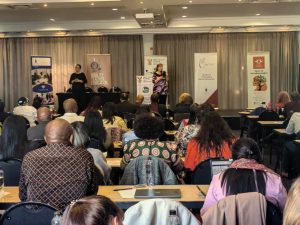
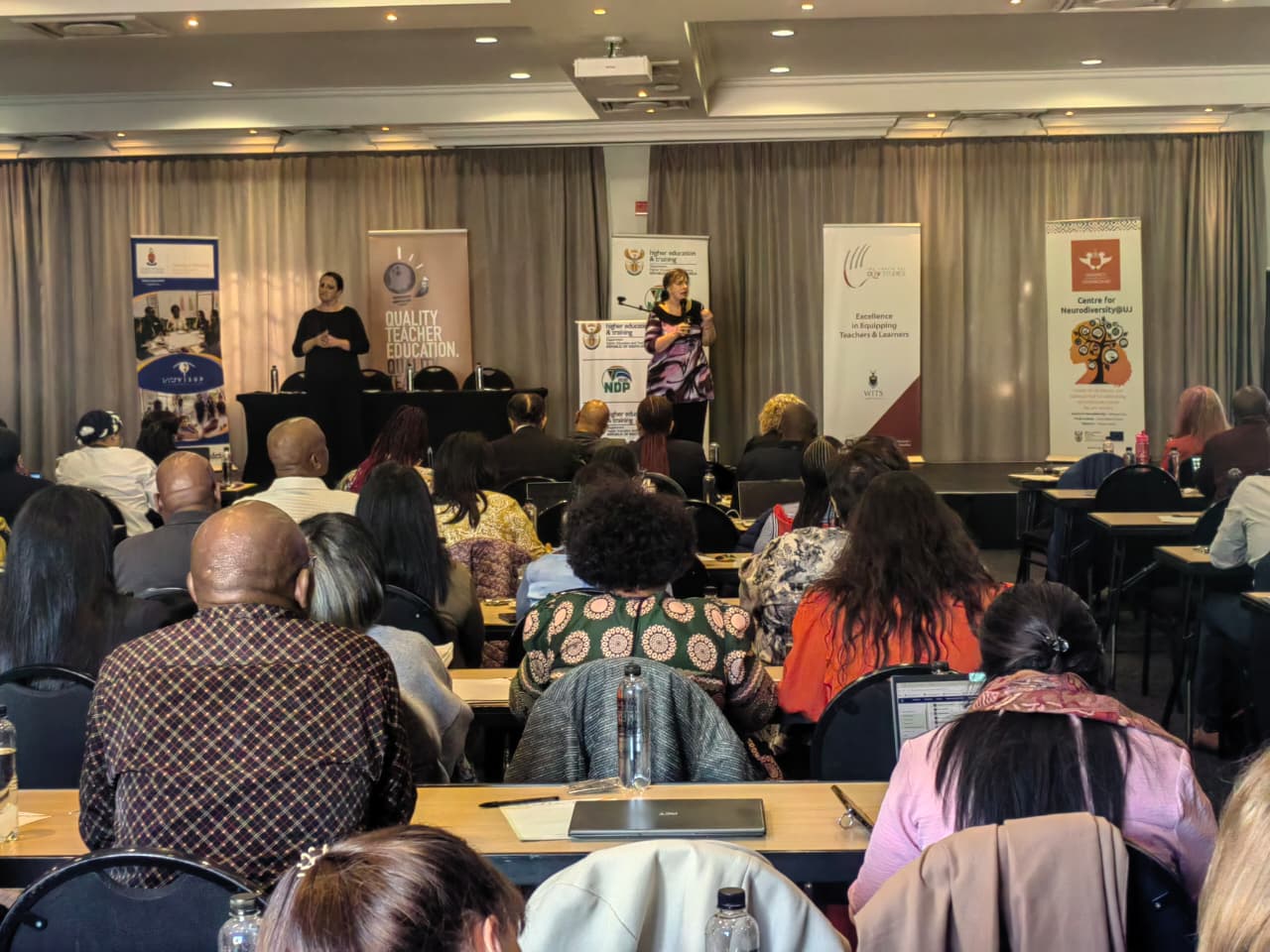
I attended the Teacher Education for Inclusive Teaching (TEfIT) National Close-Out Conference on 9-10 September 2026 as the Director of Motheo Training Institute Trust, together with Ms Nolukhanya Monare of Motheo Training Institute Trust. Hosted by the Department of Higher Education and Training (DHET) with funding from the European Union, TEfIT was designed to address the current gap in the sector-move inclusion from policy to pedagogy by strengthening how ECD practitioners and teachers are trained.
This conference was not just a celebration of three projects and three Centres of Excellence. It was a reckoning and for Motheo Training Institute Trust, which advocates for Early Childhood Development (ECD) and the ECD workforce, it was a clear affirmation: if inclusive education is to work, it must start with ECD, and it must be grounded in a Contextually Responsive Pedagogy of Resilience.
What TEfIT Was About: From Project to Architecture
The TEfIT conference had five clear objectives: to provide a national platform for reflection and dialogue; to share knowledge and best practices; to showcase TEfIT products -learning materials, research tools and innovative practices; to celebrate and formally close the EU-funded programme; and to consolidate initiatives into a coordinated sector-wide approach.
Led by Mr Silas Pillay as Programme Director and reflected on by Dr Mokwi Maphutha, Acting Director: Teacher Education at DHET, the programme showcased three Centres of Excellence that now form a national architecture for inclusive teacher education:
• The Centre for Visual Impairment Studies (CVIS) at University of Pretoria
• The Centre for Deaf Studies at University of the Witwatersrand
• Neurodiversity@UJ at University of Johannesburg
My contribution during Session 2 was simple: TEfIT has closed the gap between policy intention and classroom implementation that the SIAS Policy of 2014 has long identified.
Sustainability now depends on institutionalising these centres within university budgets, not leaving them as donor projects.
The Legislative Environment: Why This Conference Is Legally Mandated, Not Optional
Throughout Day 1 and Day 2, two questions dominated: Is inclusive education a favour or a right and who is responsible for making it real? The answer lies in law.
1. International Framework:
TEfIT is South Africa’s response to global obligations. The UNESCO Salamanca Statement (1994) declared that ordinary schools must accommodate all children. The UN Convention on the Rights of Persons with Disabilities (CRPD), ratified by South Africa in 2007, Article 24, is unambiguous: inclusive education is a right, and states must ensure teachers are trained in appropriate communication, including Braille and South African Sign Language. The UN Convention on the Rights of the Child and SDG 4 on equitable quality education reinforce this.
2. South African Framework:
The South African law is aligned to global policies. The Constitution of the Republic of South Africa, section 9 on Equality and section 29 on the Right to Education, read with section 10 on Human Dignity, requires transformative constitutionalism. The Constitutional Court’s principle of horizontal application means schools, Resources and Training Organisations (RTOs) or Skills Development Training Providers, TVET Colleges and universities themselves bear a duty not to discriminate.
This constitutional duty is operationalised by:
• White Paper 6 on Special Needs Education (2001) and its current revision: The foundational shift from a medical model (fix the child) to a social-ecological model (fix the system). It introduced district-based support teams and full-service schools. Mr Jabulani Ngcobo, Director: Inclusive Education at Department of Basic Education, presented the current state of implementation and progress with th1. International Framework:
• TEfIT is South Africa’s response to global obligations. The UNESCO Salamanca Statement (1994) declared that ordinary schools must accommodate all children. The UN Convention on the Rights of Persons with Disabilities (CRPD), ratified by South Africa in 2007, Article 24, is unambiguous: inclusive education is a right, and states must ensure teachers are trained in appropriate communication, including Braille and South African Sign Language. The UN Convention on the Rights of the Child and SDG 4 on equitable quality education reinforce this.
• 2. South African Framework:
The South African law is aligned to global policies. The Constitution of the Republic of South Africa, section 9 on Equality and section 29 on the Right to Education, read with section 10 on Human Dignity, requires transformative constitutionalism. The Constitutional Court’s principle of horizontal application means schools, Resources and Training Organisations (RTOs) or Skills Development Training Providers, TVET Colleges and universities themselves bear a duty not to discriminate.
• This constitutional duty is operationalised by:
White Paper 6 on Special Needs Education (2001) and its current revision: The foundational shift from a medical model (fix the child) to a social-ecological model (fix the system). It introduced district-based support teams and full-service schools. Mr Jabulani Ngcobo, Director: Inclusive Education at Department of Basic Education, presented the current state of implementation and progress with the revised White Paper 6 on Day 2.
My intervention was to ask whether the revised White Paper will finally include enforceable norms and funding for full-service schools and align with the BELA Act 2024.
• SIAS Policy (2014): How we identify barriers, not label learners. It makes the teacher the first line of support.
• MRTEQ – Minimum Requirements for Teacher Education Qualifications (2015, revised 2021): Presented by Mr Neil Makhaga of DHET, MRTEQ now mandates that all new teachers must be able to identify and address barriers to learning. Prof Lee Rusznyak of Wits challenged us in Session 6: inclusion cannot be a single module; it must be infused across all methodology modules. I agree – and this is the model Motheo advocates for ECD practitioners.
• Constitutional Amendment 2023-SASL as 12th Official Language: Prof Claudine Storbeck and Dr Lucas Magongwa and Dr Guy McIlroy from the Centre for Deaf Studies at Wits made it clear on Day 2: sign bilingualism is now a constitutional imperative, not a pedagogical preference, under section 6(1) of the Constitution and CRPD Article 24(3)(b).
Day 1 Insights: The Research That Matters for ECD
Day 1 showcasing of student research under Session 3 is directly relevant to ECD workforce development.
Dr Maesala Manis (UP) showed co-creation with teachers in developing a postgraduate qualification in Visual Impairment – a model of “nothing about us without us.” Prof Daphney Mawila-Chauke (UJ) on building resilience in neurodiverse children experiencing adversity and Dr Khosi Mabaso (UJ) on empowering parents reminded us that adversity is a barrier to learning, not an inherent deficit – a core SIAS principle that starts in ECD.
My strongest critique was reserved for assessment: Dr Athena Clayton’s work on verifying the SSAIS-R IQ tool and Dr Mariam Muller and Dr Gene Erasmus on progression. I argued from the floor that assessment must serve support, not gatekeeping, and that progression without support is exclusion inside the classroom. This is where ECD is critical – if we identify barriers early in ECD, we prevent the need for progression policies later.
Dr Poonam Mithal on multi-disciplinary support for severe intellectual disabilities and Dr Melissa Chunderdooth on sexuality education for adolescent girls with intellectual disabilities forced us to confront rights-based inclusion -bodily autonomy under CRPD Article 23 and Constitution section 12 -which must begin with age-appropriate, inclusive foundation phase and ECD programmes.
The afternoon Brain Architecture Game led by Dr Jean Fourie and students was a turning point. It modeled experiential learning and Universal Design for Learning (UDL). My contribution: this is the pedagogy ECD needs -multiple means of engagement, not standardisation.
Day 2: The Way Forward and the Link to ECD and a Pedagogy of Resilience
Day 2 moved from showcase to sustainability.
The most powerful moment was Ms Princess Sibanda of University of Pretoria sharing her first-hand experience of being included. My reflection: policy is not abstract; it is dignity. Section 10 of our Constitution lives or dies in a classroom.
The open discussion on strengthening inclusive education on ground level, facilitated by the three Centre Directors, is where Motheo Training Institute Trust made its central contribution.
I submitted that ground level in South Africa means distance and part-time students -70% of ECD practitioners and teachers in KwaZulu-Natal and Eastern Cape study via distance. TEfIT materials must be translated into isiZulu and Sepedi or any other indigenous languages, made low-data for ODL, and adapted into a one-page UDL lesson planning template that a Grade R teacher can use without waiting for a district-based support team that may never come.
This is where TEfIT meets the Faculty of Education, Botswana Open University webinar concept I reflected on this a month ago: Pedagogy of Convenience versus Pedagogy of Resilience. As Prof Sigamoney Manicka Naicker argued in his paper: Towards a Contextualised Pedagogy of Resilience, a Pedagogy of Convenience privileges standardisation, predetermined developmental expectations, dominant languages and institutional routines, expecting children to adapt. A Pedagogy of Resilience reverses this logic: the system adapts to the child. It begins with children lived realities, home languages, cultural knowledge, relationships and unequal access to resources.
Therefore, this is precisely what ECD does. ECD is more than preparation for formal schooling; it is the foundation for educational equity.
TEfIT’s Centres of Excellence must therefore partner with ECD because the language and cultural capital that children bring to ECD, if affirmed early, determines whether White Paper 6 succeeds or fails.
Motheo Training Institute Trust advocates for this because the ECD workforce is the first implementation of White Paper 6 and SIAS. If ECD practitioners are not trained to recognise linguistic and cultural capital, strengthen belonging and agency, and identify barriers early, no amount of later curriculum differentiation will fix the inequity.
Conclusion:
TEfIT has answered a 25-year-old question: How do we train teachers for an inclusive system? It has given us materials, qualifications, and institutional architecture.
The presence of DHET leadership – Dr Justinus Setshedi and Mr Phillip Tshabalala, Chief Director: Teaching, Learning and Research Development at the close was a commitment to sustainability.
However, the real test is beyond this hotel conference room. The test is whether a child in a rural ECD centre in Limpopo, carrying rich home languages and community knowledge, encounters a practitioner trained in a Pedagogy of Resilience, supported by UDL and SIAS, who sees her language as capital, not a barrier.
This is why Motheo Training Institute Trust was at TEfIT and that is why Ms Nolukhanya Monare and I will continue to advocate that inclusive teacher education must be contextualised, African, and must start at ECD.
TEfIT’s lesson is clear: inclusion is not charity. It is constitutionally mandated, internationally obligated, and pedagogically possible – if we choose resilience over convenience.
* This article reflects the opinion of the author and not necessarily that of the DBE, UNICEF and partners.
Rex Molefe
(The Director of Motheo Training Institute Trust)